

Our Core Business Sectors
Five complementary sectors: three leading the shift towards cleaner sources, and two serving today's energy demand efficiently and responsibly. This page explains the nature of each sector, its challenges and the solutions that go with it.
Waste-to-Energy
Solar & Renewable Energy
Wind Energy
Petroleum Products Trading
Oil & Gas Field Development
Illustrative images

Waste-to-Energy
This sector brings waste management and energy production together. Residual waste left after sorting and recycling is treated with thermal or biological technologies to recover its energy instead of being buried in landfill.
Solutions vary with the nature of the waste: mixed municipal waste usually suits controlled-combustion facilities, separated organic waste suits anaerobic digestion, and gasification is studied for prepared feedstock.
Waste-to-energy pageMain challenges
- Growing waste volumes and shrinking landfill space
- Variable waste composition and calorific value
- Strict requirements for emissions and residues
- The need for community acceptance and environmental permits
Solutions & applications
- Energy-recovery facilities for municipal waste
- Anaerobic digestion for organic waste
- Integrated systems linking sorting and recycling with energy
- Power and heat for cities and industry
Technical considerations
- Analysing waste quantities and composition
- Selecting the right technology
- Gas cleaning and monitoring systems
- Ash and residue management

Solar & Renewable Energy
Photovoltaic systems convert sunlight directly into electricity. They can be installed at scale to feed the grid, or close to consumption on commercial and industrial rooftops as distributed generation.
The sector is flexible and can grow in phases, but project success depends on the quality of assessment, design and components, and on regular operation and maintenance throughout the system's life.
Solar energy pageMain challenges
- Variable output with sunshine hours and weather
- Limited space and grid connection constraints
- Differing local export and tariff rules
- The need for ongoing maintenance and monitoring
Solutions & applications
- Utility-scale photovoltaic plants
- Commercial and industrial rooftop systems
- Hybrid and battery-integrated systems
- Off-grid solutions for remote sites
Technical considerations
- Solar resource and expected yield assessment
- Sizing systems to consumption
- Selecting modules, inverters and structures
- Protection, monitoring and interconnection

Wind Energy
Wind turbines convert the kinetic energy of moving air into electricity with no fuel and no operating emissions — in onshore farms on land or offshore farms that benefit from stronger, steadier sea winds.
Project success depends on accurate wind-resource measurement and careful planning of turbine layout and grid connection, and in many places wind combines with solar and storage in hybrid systems.
Wind energy pageMain challenges
- Output that varies with wind speed
- The need for sites with a good wind resource
- Transporting and installing very large components
- Care for wildlife, noise and land use
Solutions & applications
- Onshore wind farms
- Offshore wind farms
- Hybrid systems with solar and batteries
- Operations, monitoring and maintenance
Technical considerations
- Wind measurement and annual yield estimates
- Turbine layout design and class selection
- Grid connection and operator requirements
- Environmental impact assessment

Petroleum Products Trading
This sector operates in international oil markets, where cargoes of crude oil and refined products move between producers, refiners and users through complex sea and land supply chains.
Successful transactions depend on precise specifications, clear commercial documents, defined delivery terms, independent inspection and rigorous compliance procedures to verify the parties and the legitimacy of the deal.
Petroleum products trading pageMain challenges
- Volatile prices and freight costs
- Many parties and documents in each transaction
- Fraud risk and unreliable intermediaries
- Sanctions and anti-money-laundering requirements
Solutions & applications
- Coordinating crude oil and refined product transactions
- Reviewing specifications and commercial offers
- Coordinating inspection and maritime logistics
- KYC and counterparty verification
Technical considerations
- Product specifications and inspection criteria
- Incoterms 2020 and allocation of risk
- Sales and purchase agreements and payment instruments
- Shipping and delivery documents
Oil & Gas Field Development
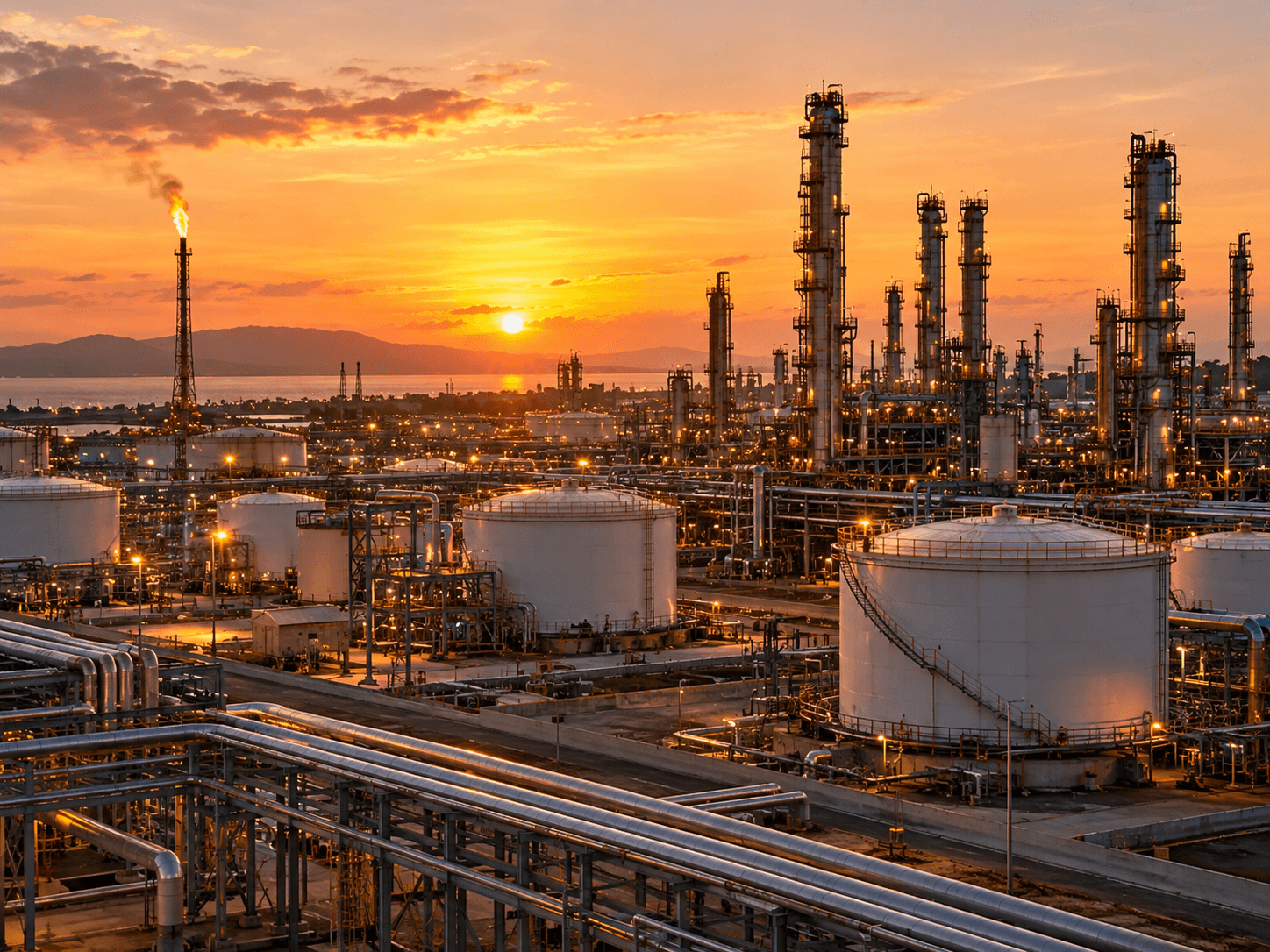
This sector covers the infrastructure on which the oil and gas industry runs: upstream production facilities, midstream pipelines and storage terminals, and downstream processing plants.
These long-lived assets require integrated planning from the start — balancing efficiency, safety and environmental responsibility from feasibility through operational readiness and ongoing modernization.
Oil & gas field development pageMain challenges
- Large, multidisciplinary projects
- Demanding operating environments and high safety requirements
- Ageing existing assets
- Growing pressure to reduce emissions
Solutions & applications
- Upstream and production facility development
- Pipelines, storage and terminals
- Processing plants and industrial utilities
- Facility modernization and reliability improvement
Technical considerations
- Scope definition and technical feasibility
- Engineering coordination and procurement
- Testing and commissioning
- Asset integrity and preventive maintenance
Which sector fits your project?
If you are not sure which sector best fits your needs, describe your project and we will help you find the right starting point.